Gardening Services in Barbican for practical outdoor care and tidy, usable spaces

Gardening Services Barbican can support homeowners, landlords and businesses that want regular outdoor upkeep or one-off help with larger jobs. Our work can include garden maintenance, lawn care, hedge trimming, planting support, seasonal tidying and clearance, with each visit planned around the condition of the space and the tasks that matter most. The aim is straightforward: keep the garden manageable, neat and ready for everyday use without overcomplicating the work.
Because gardens vary, the service can be shaped around maintenance on an established border, a fuller refresh after a period of neglect, or a practical tidy-up before a change in occupancy. We can discuss access, the size of the area, the state of the growth and any items that need to be removed, then suggest a sensible scope. If you are comparing options, clear priorities at the start make it easier to plan the right level of work and request a quotation with confidence.
For a broader look at what is available, the services overview sets out the main gardening options in one place. It is useful when you are deciding whether your project needs routine care, selective cutting, clearance or a combined visit that brings several tasks together. If you already know the work you need, you can go straight from the overview to the most relevant service page and then ask for a quotation.
Regular garden maintenance and seasonal upkeep
Routine maintenance is often the simplest way to keep an outdoor area under control. It may include mowing, edging, weeding, light pruning, deadheading and general tidying, all carried out with attention to the condition of the plants and the layout of the garden. Rather than treating every visit as a reset, the work can be adapted to the season and the actual growth present, which helps preserve the structure of borders and paths.
We can also combine maintenance tasks where that is more efficient. A lawn may need mowing and trimming in the same visit, while planted areas may benefit from selective cutting back, clearing fallen material and removing spent growth. In practical terms, that means fewer separate arrangements and a result that feels coherent rather than piecemeal. If the site has awkward corners, narrow access or mixed surfaces, those details are worth mentioning when you request a quotation.
The main maintenance tasks often fall into a few familiar groups:
- lawn mowing and tidy edge finishing
- weed control in beds, borders and paved areas
- light pruning and shaping of manageable growth
- removal of leaves, cuttings and general green waste
- seasonal preparation such as cutting back tired planting
Garden clearance for overgrown or cluttered spaces
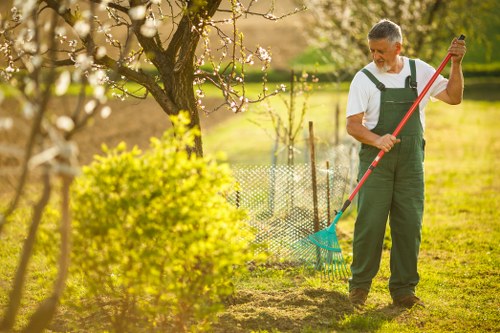
When a garden has been left for a while, clearance work may be needed before normal upkeep can begin. That can involve cutting back dense growth, removing piles of green waste, dealing with tangled or broken material and creating a cleaner starting point for future maintenance. The work is usually best approached carefully, because heavy cutting can reveal hidden features, weak fencing, uneven ground or plants that should be preserved.
Clearance is not the same as routine maintenance. It is more about restoring access, opening up the space and removing what is getting in the way of safe, practical use. Depending on the site, that may mean a partial clearance focused on the most obstructed areas or a fuller tidy-through of the whole garden. If you are unsure which approach fits, ask for a quote based on photos and a brief description of the main issues; that makes it easier to price the work sensibly.
Useful clearance decisions usually come down to a few questions: which growth should stay, what needs to go, whether waste will need to be bagged or loaded, and whether there are access limits such as shared paths or rear entries. When those points are clear, the work can be planned in a practical sequence. You can then move from heavy initial clearance into ongoing care, rather than repeating the same difficult task later.
Hedge trimming, cutting back and shaping
Hedges and shrubs often need more than a quick pass with a cutter. Good trimming balances shape, density and the plant’s natural growth pattern, so the result looks neat without stripping away too much at once. Depending on the species and the time of year, the work may focus on straightening edges, reducing bulk, lifting lower growth or tidying long shoots that are affecting paths, gates or neighbouring spaces.
Where hedging forms a boundary, regular attention can help keep the line consistent and avoid uneven patches that are harder to recover later. Shrubs may need a lighter approach, especially when flowering or newly established. This is one reason why a simple “trim everything†instruction is not always ideal. A better brief is to say what should remain open, what should be reduced and whether you want a crisp formal finish or a softer natural outline.
In some gardens, hedge work sits alongside other jobs such as border tidying or lawn care. When that happens, it is sensible to plan the order of work carefully so that clippings are collected efficiently and access stays clear. If you want the job framed as a broader maintenance visit, you can mention that in your enquiry and ask for a quotation that reflects the full scope rather than a single isolated task.
Lawn care, edging and tidy finish work
A lawn can change the whole appearance of a garden, but only when it is cut and finished properly. Mowing is the obvious part, yet edging, trimming around obstacles and clearing the cuttings all affect the final result. A neat lawn edge can sharpen the whole layout, while neglected borders can make an otherwise decent lawn look untidy. That is why lawn work is often most effective when it includes the surrounding details.
Different lawns need different handling. Some are straightforward and can be kept on a regular cut cycle; others have patchy growth, slopes, tight access or mixed use, which means the approach needs more care. We can work with the condition of the grass rather than forcing a one-size-fits-all pattern. If the area contains toys, pots, furniture or garden features, it helps to mention them in advance so the work can be planned efficiently and safely.
Where the lawn is part of a larger scheme, it may make sense to combine mowing with weed control, light pruning or general clearing. That gives the space a better overall finish and reduces the chance of one untreated area undermining the rest. For a simple start, send a few details of the lawn size and condition, then ask us to prepare a quotation based on the work needed rather than a fixed assumption.
Landscape gardening for structural changes and planting plans

Landscape gardening is the part of the service that moves beyond routine upkeep and into changes that alter the shape, use or planting structure of a garden. Depending on the brief, that may include preparing ground for new beds, repositioning features, reshaping a tired layout or bringing a clearer structure to a space that no longer works well. The focus is still practical: create a garden that is easier to maintain and more pleasant to use.
Some projects begin with a small set of improvements rather than a full redesign. For example, a garden might benefit from better definition between lawn and border areas, a refreshed planting scheme, or the removal of outdated material before new work starts. In these cases, design choices should remain realistic and manageable. We can discuss whether the priority is visual improvement, simpler maintenance, or a balance of the two, then shape the work accordingly.
Planning matters here because soil condition, drainage, sun, shade and access can all affect what is sensible to do next. The most useful enquiries usually include the current state of the garden, any features to keep, and the rough outcome you want to achieve. If the project needs more than one stage, it is often best to break it into clear sections so the quotation reflects the actual sequence of work rather than an unhelpful all-or-nothing figure.
Landscape gardening materials, layout and finish choices
When a garden is being improved rather than simply maintained, the choice of materials and layout can shape how much work is needed later. Borders, edging, paths and planting zones all influence how the space functions, so the best plan is one that suits both the garden and the amount of upkeep you want to do. A well-judged layout can make future maintenance easier without sacrificing appearance.
It also helps to think about the finish you want at the start. Some clients prefer a clean, minimal result with defined edges and simple planting; others want a softer, fuller garden with more texture and seasonal interest. Neither is automatically better. The right option depends on how you use the outdoor area, what you want to look after yourself, and how much time you want the garden to take on an ordinary week.
For projects of this kind, useful information includes the size of the area, any existing features that must stay in place and whether the work is mainly for appearance, function or both. Pricing and quotes explains how to ask for an estimate in a way that matches the scope of the job, especially where several tasks may need to be combined into one planned visit. If you are ready, ask for a quote and outline the outcome you want to achieve.
Choosing the right scope for your garden
Not every outdoor area needs a complete overhaul. In many cases, the best result comes from choosing the smallest sensible scope that resolves the actual issue. That might mean a one-off clearance, a focused trimming visit or a maintenance plan that concentrates on the parts of the garden most visible from the house or entrance. A careful scope keeps the work useful and prevents unnecessary effort.
It is also worth separating immediate needs from longer-term wishes. If the garden needs to be made safe, tidy or accessible first, that should sit ahead of decorative improvements. Once the space is under control, you can think about planting changes, layout adjustments or a more regular schedule of attention. This staged approach can be more manageable and often leads to a better final result than trying to do everything at once.
If you are comparing service options, it helps to keep one question in mind: what would make the space easier to use in the next month, not only more attractive in the next photograph? That usually leads to a more practical brief and a more accurate quotation. For a fuller outline of the work types we cover, the garden maintenance page is a useful next step before you send your enquiry.
About Barbican

Barbican is a densely built area in the City of London, shaped by the long history of the Square Mile and by the large-scale rebuilding that followed wartime damage. The name is closely associated with the Barbican Estate, a major post-war residential and cultural complex designed in a distinctive Brutalist style and developed from the 1960s onward. Its elevated walkways, concrete terraces and planted areas create a strong architectural character that is unlike the more typical street patterns found elsewhere in central London. The Barbican Centre, opened in the 1980s, brought a major arts venue into the area and helped establish its reputation as a place where housing, culture and public space sit closely together. Nearby, the Museum of London site and the surviving historic lanes of the City have long provided a contrast between older fragments of London and later redevelopment. The district is also close to the remains of the Roman and medieval city walls, reminders that this part of London has been continuously occupied and reshaped over many centuries. Although much of Barbican is modern in appearance, its setting within the historic City gives it a layered character, with financial offices, residential blocks, walking routes and cultural venues all concentrated in a compact area. Green space appears in pockets rather than as broad parks, which makes the designed courtyards, planters and raised walkways especially prominent within the local streetscape.
Garden clearance and maintenance with straightforward quotation requests
Once you know whether your garden needs routine upkeep, a clearance visit or a more involved improvement plan, the next step is usually to match that need to the right service description. Clear briefs save time because they reduce guesswork about the amount of growth, the amount of waste and the order in which the tasks should be tackled. For a lot of customers, the most useful starting point is simply to state what looks untidy, what must remain and what result would count as a successful finish.
When preparing an enquiry, it helps to include two practical details: the current condition of the area and any access points that may affect the work. Photos can be useful, but a short written description also matters because it gives context about whether the job is a light tidy, a significant cut-back or a mixed visit involving several jobs. If the work is seasonal, let us know the timing you have in mind so the quotation can be based on the real scope rather than a vague assumption.
To move ahead, look over the service pages that fit your garden most closely and then ask for a quotation in plain terms. The garden clearance page is especially relevant if the space is overgrown, cluttered or needs a reset before regular care can begin. If your requirements are broader, you can still keep the enquiry simple: tell us what you want done, what you want left alone and when you would like to get started.
Support for ongoing care and larger outdoor projects

Some customers need a one-off visit, while others prefer a steadier pattern of work through the year. Both approaches are sensible when they are based on the condition of the site. Ongoing care is usually best for gardens that already have a workable structure, while larger projects make more sense where the space needs visible change before maintenance can be effective. A good quotation should reflect that difference instead of treating every garden as if it were the same.
We can therefore shape the service around the task in front of us, whether that means focused trimming, clearance, mowing, planting support or broader landscape gardening. The key is matching effort to need. If a garden only requires the control of growth and a consistent tidy finish, the work should stay proportionate. If the space needs more substantial reshaping, the brief should make that clear from the outset so the plan and quotation are aligned.
When you are ready to talk through the job, use the service page that most closely fits the work and then request a quotation in your own words. For customers who want a simple next step, the contact us page is the clearest place to send the details and ask us to review the scope.